

Telescope observing often involves battling light pollution – even faint starlight can be overwhelmed by city lights, necessitating remote observing locations or special filters. elaborate
Neutron stars are so dense that a teaspoonful would weigh billions of tons. elaborate


Black holes aren't actually "holes" – they're incredibly dense regions of spacetime with gravity so strong that nothing, not even light, can escape. elaborate
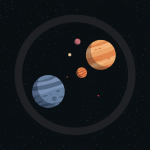
Some exoplanets are tidally locked to their stars, meaning one side always faces the star (like our moon with Earth), resulting in extreme temperature differences between the two hemispheres. elaborate

The first confirmed detection of an exoplanet orbiting a Sun-like star (51 Pegasi b) was made in 1995 using the radial velocity method, which detects the tiny wobble in a star's movement caused by the gravitational pull of an orbiting planet. elaborate