Back to Fact Wall
Geology Topics (14)
Sedimentology Geology
0

Sedimentary rocks can contain fossilized evidence of ancient life, providing a window into Earth's history going back billions of years. elaborate

Earthquakes Geology
1

Earthquakes can sometimes cause the land to rise or fall several feet. elaborate

Tectonics Geology
2

The word "tectonics" comes from the Greek word "tektonikos," meaning "pertaining to building" or "relating to construction." elaborate

Minerals Geology
3

Some minerals, like quartz, can exhibit piezoelectric properties, meaning they generate an electric charge in response to mechanical stress. elaborate

Catastrophism Geology
4

Catastrophism, once a dominant geological theory, posited that Earth's features were primarily shaped by sudden, violent events like massive floods, rather than gradual processes. elaborate

Volcanoes Geology
5

Volcanic ash can stay in the atmosphere for years, affecting global temperatures. elaborate

Seismology Geology
6

Seismology uses data from seismic waves, not just earthquakes, to study Earth's interior. Explosions and other vibrations are also used as sources. elaborate

Deep Time Geology
7

The timescale of deep time is so vast that if the entire history of Earth were compressed into a single year, all of recorded human history would fit into the last few seconds. elaborate

Speleology Geology
8

Speleology sometimes involves using specialized equipment like ropes, harnesses, and lighting systems to explore challenging cave systems. elaborate

Volcanology Geology
9

Some volcanoes erupt with a sound like a jet engine. elaborate

Geochronology Geology
10

Geochronology uses radioactive decay of isotopes to date materials older than the range of radiocarbon dating (which is around 50,000 years). elaborate

Anthropocene Geology
11

The Anthropocene epoch is marked by a significant increase in the global abundance of plastic, with plastic particles now found even in the deepest ocean trenches. elaborate

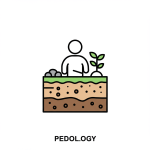
Pedology Geology
12

Pedology, the study of soil, involves classifying soils based on their horizons, which are distinct layers with differing properties reflecting the soil-forming processes. elaborate
Glaciology Geology
13

Glaciers can create surprisingly loud noises, from creaking and groaning to booming sounds caused by the fracturing of ice. elaborate

No more topics to list!