Tools facts
Facts from the Tools category. Tap to start getting facts on a topic.

Early paint sprayers were adapted from insecticide sprayers. elaborate

Some specialty tools, like those used in microelectronics or neurosurgery, are so precise that a single human hair can affect their functionality. elaborate


Many tool review websites and YouTube channels are secretly (or not-so-secretly) funded by brands or receive free tools for review, potentially influencing their objectivity. elaborate

Miter saws got their name from the "miter joint," a type of angled joint they're specifically designed to cut, which is often used in picture frames. elaborate

Alignment racks, used in data centers, are sometimes designed with integrated cable management features to improve airflow and reduce clutter, thus increasing efficiency. elaborate

Many modern paint booths use sophisticated air filtration systems to remove over 99% of paint overspray, minimizing environmental impact and improving worker safety. elaborate

Early wrench sets often included a "monkey wrench," an adjustable wrench, before the standardization of individual sized wrenches became common. elaborate

The earliest caulk guns were actually manually operated, requiring considerable hand strength to dispense the sealant. elaborate

Synthetic data generation tools can create entirely artificial datasets that mimic the statistical properties of real-world data, which allows researchers and developers to train machine learning models while bypassing privacy regulations and the difficulties of collecting sensitive information. elaborate

Some screwdriver sets include a bit that's specifically designed to open paint cans. elaborate

The first commercially successful portable electric drill was invented in 1917. elaborate
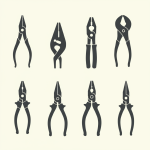
Slip-joint pliers, a common type, were invented by William Petersen in 1845. elaborate

Some scan tools can now communicate wirelessly via Bluetooth or Wi-Fi, eliminating the need for a physical connection to the vehicle's diagnostic port. elaborate

Some engine analyzers can detect problems *before* they cause a noticeable change in how the engine runs, potentially saving costly repairs down the line. elaborate

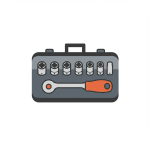
Early socket sets often used square drives instead of the now-standard hex (six-point) drives. elaborate

The utility knife, despite its name, wasn't originally designed for general use. Its primary early application was in the printing industry. elaborate


The first cordless drill, invented in 1917, was actually a hand-cranked model and not electric. It wasn't until much later that battery power became a feature. elaborate

The blade on a table saw spins counter-clockwise (when viewed from above) in most models. elaborate
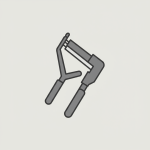
Frame straighteners, used in auto body repair, often utilize hydraulic pressure, not just brute force, to gently realign damaged metal. elaborate

The first circular saw designed for woodworking wasn't powered by electricity; it was driven by a water wheel! elaborate

Brake lathes, despite their industrial appearance, often incorporate sophisticated digital readouts to ensure incredibly precise machining of brake rotors, minimizing runout (wobble) for optimal braking performance. elaborate

a fact elaborate