Philosophy facts
Facts from the Philosophy category. Tap to start getting facts on a topic.

Beliefs can be influenced by the order in which information is presented, a phenomenon known as the primacy effect. elaborate

Fatalism, despite implying acceptance of inevitable events, doesn't necessarily mean passivity. Some fatalists actively pursue goals, believing their outcomes are already predetermined. elaborate

Authenticity isn't about being perfect; it's about being real, even with imperfections. elaborate

Some nihilists find meaning in the *absence* of inherent meaning, embracing the freedom and responsibility that comes with creating their own values in a meaningless universe. elaborate

Deconstruction, despite its association with dense academic texts, originated partly from a close reading of literary works, particularly those of novelists like Maurice Blanchot. elaborate

Existentialist philosophers often emphasized individual freedom and responsibility to the point of suggesting that existence precedes essence—meaning we are born into the world and define our own purpose, rather than having a pre-determined one. elaborate
Karl Marx was offered a job writing for the New York Tribune. elaborate

The word "aesthetic" comes from the Greek word "aisthetikos," meaning "perceptible by the senses." elaborate

Hermeneutics, the theory of interpretation, originally focused on interpreting biblical texts before broadening its scope to encompass all forms of understanding. elaborate
Socrates famously claimed to know nothing. elaborate

Pragmatism, despite its focus on practical consequences, originated not in engineering or business, but in the philosophical reflections of American thinkers like Charles Sanders Peirce and William James. elaborate

Simone de Beauvoir was a passionate and skilled mountaineer. elaborate

The phrase "Memento Mori," while famously featured in the film *Memento*, is actually far older than the movie, originating in ancient Roman times as a reminder of mortality. elaborate
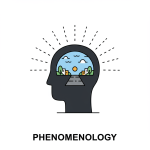
Phenomenology emphasizes lived experience, meaning its focus isn't on the *thing itself* but on how that thing *appears* to conscious awareness. elaborate
The concept of "zero" wasn't universally adopted until relatively late in history; many ancient civilizations lacked a numeral representing nothingness. elaborate

Ontology, in computer science, is often used to represent knowledge in a way that's understandable by both humans and machines, but ironically, there's no single, universally agreed-upon definition of what an ontology *is*. elaborate

Meta, the parent company of Facebook, initially considered naming its metaverse project "Horizon," a name that evokes a sense of abstract space and possibility, reflecting the intangible nature of the virtual world they aimed to create. elaborate

Some eschatological beliefs involve a literal, physical resurrection of the dead, while others focus on a spiritual or symbolic resurrection. elaborate

Simulacra, in the philosophical sense popularized by Baudrillard, aren't just copies; they are simulations that precede the reality they supposedly represent, making the original reality essentially unknowable. elaborate

A core debate in determinism revolves around whether quantum mechanics, with its inherent randomness, refutes the principle of a completely predetermined universe. elaborate

Gettier problems, a famous challenge in epistemology, demonstrate that having a justified true belief isn't always sufficient for knowledge. elaborate

Posthumanism doesn't necessarily advocate for the *replacement* of humans, but rather a re-evaluation of what it means to be human in a technologically advanced world, often questioning traditional anthropocentric views. elaborate

Immanuel Kant was incredibly punctual, famously adhering to a strict daily schedule so rigid that neighbors could set their clocks by his walks. elaborate

Jean-Paul Sartre famously refused the Nobel Prize in Literature in 1964. elaborate

The famous thought experiment, Schrödinger's Cat, wasn't actually intended by Erwin Schrödinger to illustrate quantum mechanics, but rather to *critique* its Copenhagen interpretation. elaborate

a fact elaborate